







LARP isn't just a hobby but an entire culture. It's been developing for decades. At LARPSHOPKEEPER, we've been creating armor and gear for this movement for many years. Therefore, we know not only what good armor looks like but also the origins of the live-action role-playing tradition itself.
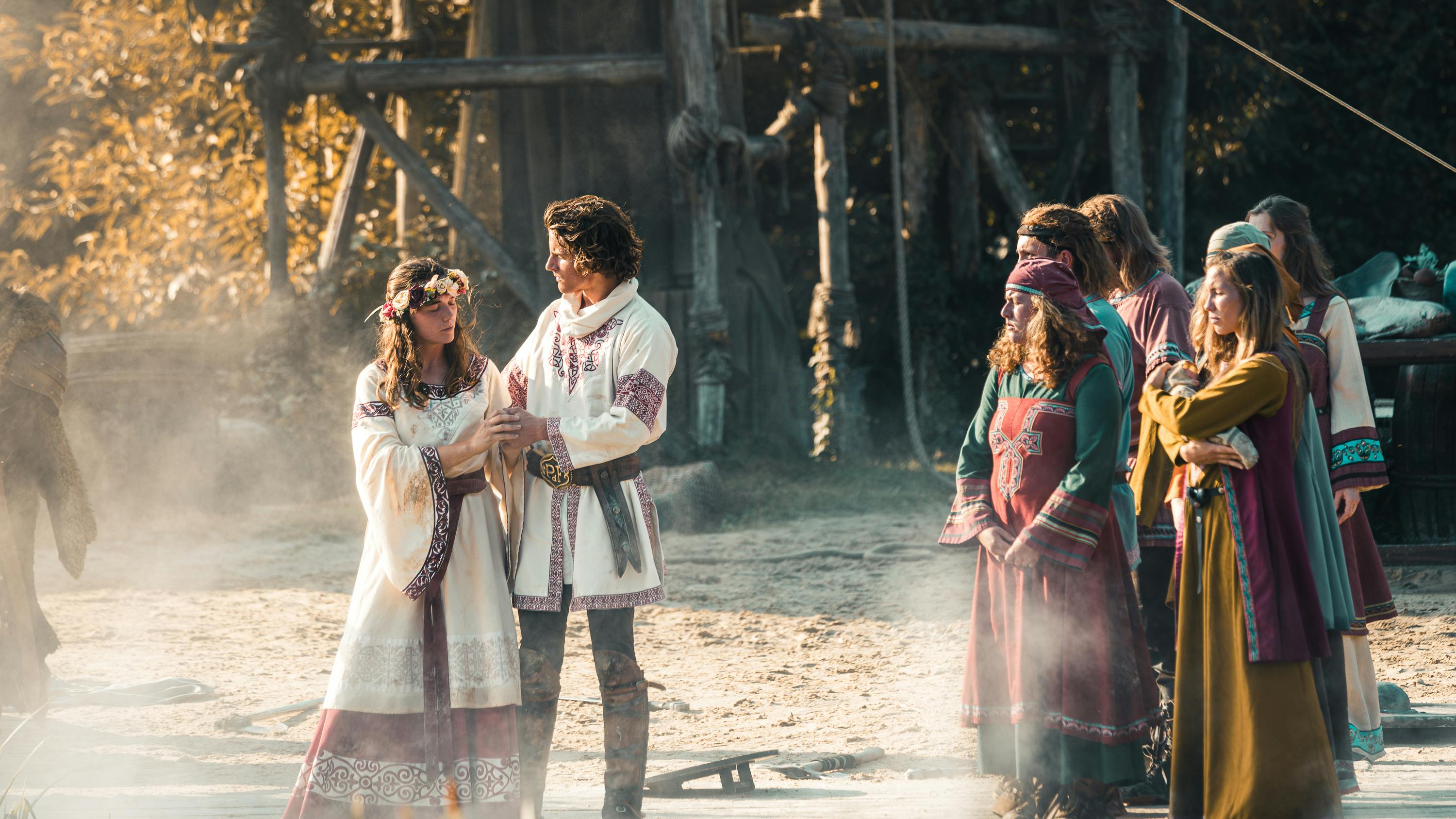
What Is LARP and Why Its History Matters
LARP (Live Action Role-Playing) is a game in which participants physically portray their characters: they wear costumes, use props, and interact with each other in real space, not at a table with dice. In short, it's theater without a script, where each player chooses their own lines and actions.
Unlike board games, no GM is describing the action verbally. Everything the player sees — the armor of a squadmate, the camp decorations, the prop weapons — should function naturally, without explanation. This is why the quality of LARP equipment is so important: the more realistic the world around them appears, the easier it is to believe.
Knowing the history helps us understand why LARP has certain rules, costumes, and prop-based combat. These are not haphazard traditions, but decades of trial and error. Here, readers will find the answer to the question: What is LARP? The Ultimate Guide is a detailed, well-structured article that will introduce you to every detail.
The Roots of LARP: Wargaming, Reenactment, and Tabletop Play
LARP didn't just pop up out of nowhere. It originated from several traditions that formed independently but later merged as a single hobby. To understand modern LARP combat, it's worth looking at the hobbies from which it emerged and understanding the history of LARP in general.
Historical Reenactment and Living History
The first source of inspiration was historical reenactment. People have long recreated battles, crafts, and everyday life of past eras — from knightly tournaments to 19th-century military reenactments. This tradition of living history gave LARP its core value: an interest in authentic costume, weapons, and the atmosphere of the medieval era.
Reenactors set a high bar. Their armor replicated real historical models, down to the fastening details and the weight of the metal. LARP borrowed this approach to authenticity from them. However, over time, it was adapted to the needs of gaming — after all, on the range, armor must not only be beautiful but also safe, lightweight, and comfortable for hours of combat.
The Rise of Tabletop Roleplaying Games
Tabletop games were the second source. Dungeons and Dragons was released in 1974, and it was the first mass-market game to have a system of characters, attributes, and a game master who narrated the story. It set the basic mechanics: the hero has a class, an inventory, and a story. Later, these mechanics were transferred from the tabletop to the real world, and thus the idea of LARP was born.
Wargaming also played a role. Military tabletop games with miniatures accustomed the community to rule systems, dice rolls, and balance of power — the same principles later formed the basis of LARP combat systems. The main traditions that formed the foundation of the movement can be identified:
- historical reenactment and living history;
- tabletop role-playing games like Dungeons and Dragons;
- military wargaming clubs with miniatures;
- theatrical productions and improvisational theatre;
- the festival culture of medieval fairs;
- fantasy literature fan clubs;
- LARP clubs at universities and schools.
Each tradition contributed its own element, from costume to combat systems. Together, they created the foundation upon which the first true LARP emerged in the 1970s. Without theatrical schooling, the movement would not have learned role-playing; without wargaming, it would not have developed honest combat systems; and without reenactment, it would not have arrived at the idea of authentic costumes.
The 1970s and 1980s: LARP Takes Shape
This decade marked a turning point. It was then that fans of cozy tabletop mechanics decided to leave the table and role-play for real. The transition from imagination to physical action was a logical continuation of what was already happening in Dungeons and Dragons clubs.
Early Live Roleplay Experiments
The first experiments with live role-playing were recorded in the late 1970s in the US and UK. Small groups of enthusiasts organized LARP games outdoors, using soft weapons and simple armor.
This raises a question that still intrigues newcomers: when did LARP start as a distinct phenomenon? Most historians agree on the date between 1977 and 1982, when the first organized games with proper rules appeared.
These early attempts were far removed from what we see today at large festivals. Props were made from scrap materials, and rules were often made up on the fly, right before the game. Nevertheless, it was then that the basic principles were established: weapon safety was more important than realism, and role-playing was more important than winning.
The Influence of Fantasy Literature
Fantasy literature played a huge role. Tolkien's books largely gave LARP its main characters: elves, orcs, mages, and knights. Tolkien established not only the setting but also the aesthetics: armor, weapons, and the atmosphere of a campaign. His influence is still felt today. Most fantasy LARP worlds allude to his legacy in one way or another.
Besides the “Lord of the Rings” universe, other books of the time also influenced the genre's development. Their worlds provided clubs with ready-made character archetypes and conflicts that were easily transferred to the playing field. This meant that organizers didn't have to invent a universe from scratch. They took the familiar literary mythology and adapted it for a live game.
The 1990s: LARP Spreads Across the World
The 1990s were a decade of growth. From a local hobby of a few small LARP clubs, it grew into a movement with thousands of participants worldwide. It was during this period that what is now known as the LARP industry emerged: prop manufacturers, rules publishers, and tour organizers between games.
Growth in Europe and North America
In Europe, especially in Germany, Scandinavia, and the UK, LARP communities began to form a sustainable culture with regular games, clubs, and festivals. In North America, their own systems, often more combative and competitive, developed in parallel. The difference in approach remains. European LARP often emphasizes theatricality, while American LARP emphasizes combat.
The Scandinavian school of LARP went even further, emphasizing deep, emotional rolep-laying — the so-called Nordic style. Here, experiencing the character's story is more important than winning a fight. This approach influenced many chamber and dramatic games that later appeared around the world.
The First Published LARP Systems
During these same years, the first published rules appeared, which could be purchased and used in a club. This was an important step. Games ceased to be a local improvisation and became a tradition with a clearly defined structure. We often recommend that beginners study the General LARP Rules Explained to understand the basic principles — they have changed little since then.
A typical set of rules at that time included:
- system of combat interactions and damage;
- prop weapon and armor safety rules;
- character and race classifications;
- magic and ability mechanics;
- in-game economy and trading;
- rules for resolving disputes between players;
- code of conduct on the range.
Over time, new sections were added to the basic ones — rules on weather conditions, night games, and interactions with non-player characters.
The 2000s and 2010s: The Age of Mega-Events
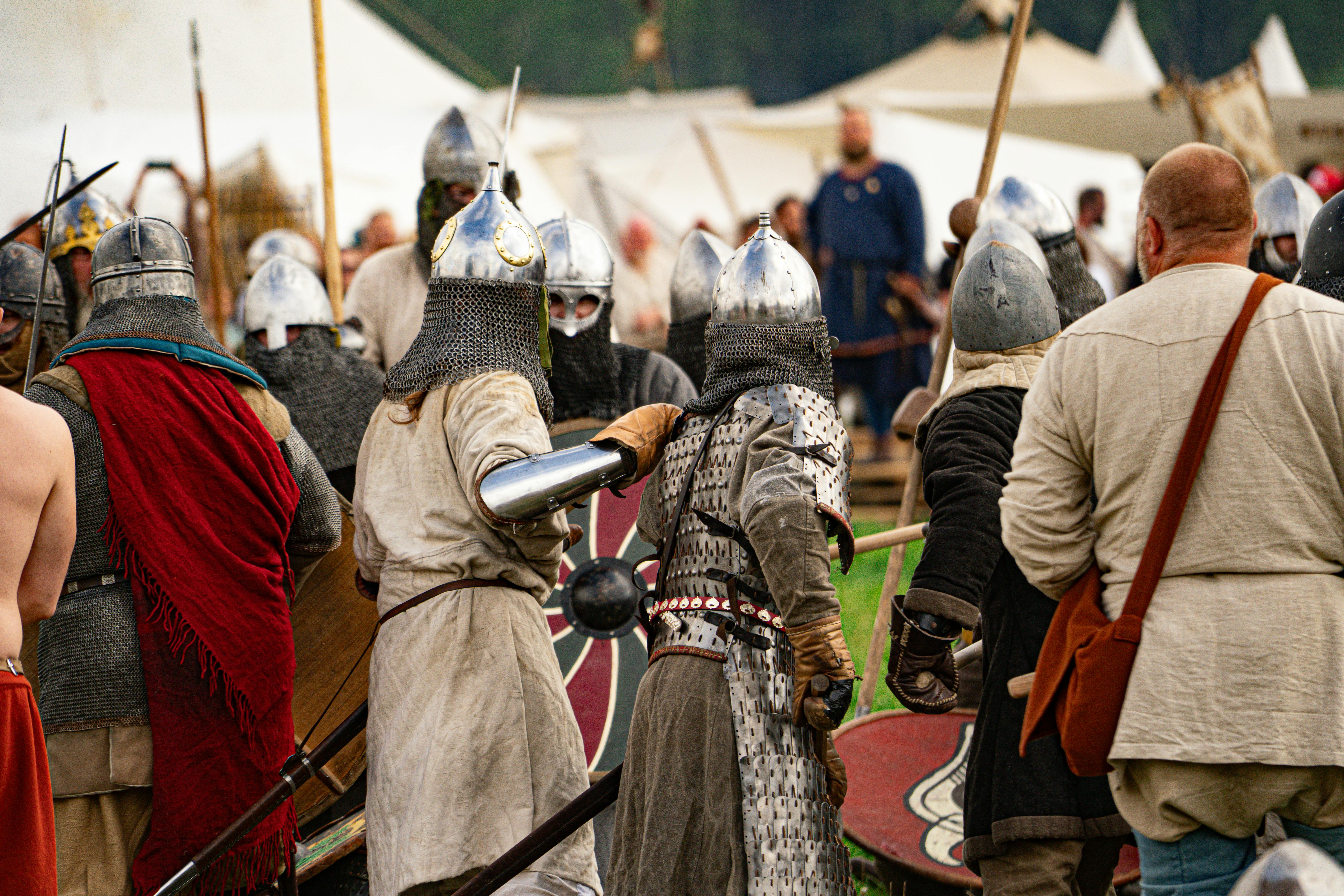
Since the early 2000s, LARP has reached a new level of scale. Small weekend games have given way to mega-events with thousands of participants. This period is often called the movement's true golden age.
ConQuest of Mythodea and DrachenFest
Germany is becoming a magnet for players from all over the world. ConQuest of Mythodea and DrachenFest attract tens of thousands of people annually. It is here that the value of high-quality armor is especially noticeable. At such festivals, equipment operates for hours nonstop and must withstand the strain.
The scale of such LARP events also required new infrastructure: dedicated retail space within the camp, medical services, and logistics systems for thousands of tents. Players began to perceive a trip to the festival as a full-fledged journey.
Empire and the Rise of Political LARP
In the UK, another trend is developing: political LARP. Empire is more about diplomacy, intrigue, and faction management than combat. This shows the hobby's development. Political LARPs brought in new people to the hobby who were more into strategy, negotiation, and resource management than combat. It drew in players who would never have thought of LARPs before and expanded the community greatly.
LARP Today: A Global, Diverse Hobby
Today, LARP is a truly global movement. Games are held in Europe, North America, Australia, Asia, and Latin America, bringing together different generations of players and different genres. Each region has developed its own style, but communities actively exchange experiences at international festivals. Modern LARP encompasses a variety of genres:
- fantasy polygonal games with combat and magic;
- post-apocalyptic and sci-fi settings;
- chamber dramatic games without a combat system;
- historical reenactment festivals;
- urban detective and mystical stories;
- political and economic simulations;
- horror games with survival elements.
Equipment deserves special mention. Modern LARP armor is no longer just fabric and foam. It consists of detailed kits made of fiberglass-reinforced polyurethane. This armor is lighter and more durable than steel. One mold can also produce several identical pieces, which is useful for squads and guilds. Polyurethane captures fine details, while fiberglass reinforcement helps the armor resist impacts and deformation.
What LARP's History Teaches Us
Looking back over the movement's entire history, it's clear: LARP has always evolved thanks to the community, not from the top down. Every milestone, from the first outdoor games to mega-festivals, emerged because players themselves wanted more.
Understanding LARP origin helps us appreciate traditions that seem obvious today: safety rules, factional divisions, and costume and armor culture. This subculture has come a long way from a local experiment to a global phenomenon — and continues to grow.
Over its half-century of history, LARP has experienced several waves of innovation: from the advent of printed rules to the transition to modern materials for armor and weapons. At LARPSHOPKEEPER, our mission is to support this movement with high-quality gear. It helps players feel part of this greater history every time they step onto the range.